8 Tools Small Businesses Can Use to Increase Customer Loyalty
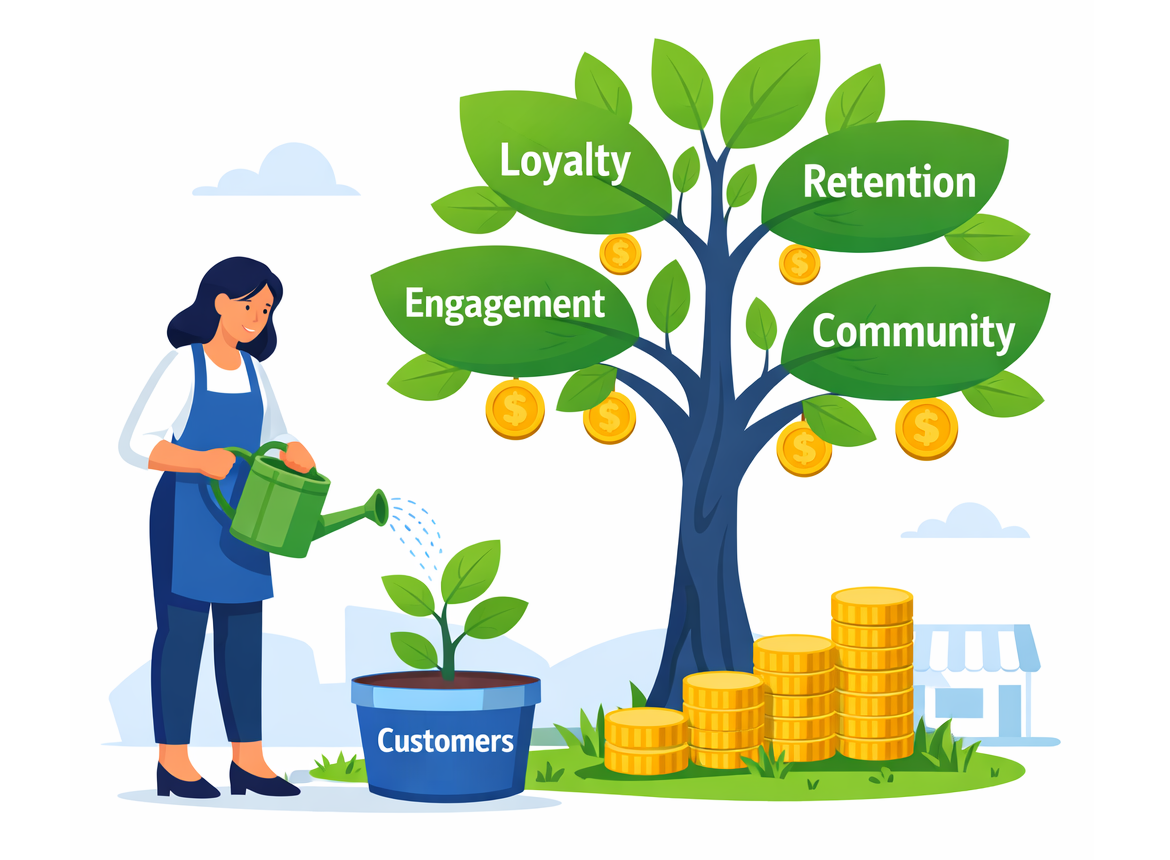
And Why Customer Lifetime Value (CLV) Is the Metric That Matters Most small businesses focus heavily on acquiring new customers. Advertising, promotions, and discounts are common tactics used to attract attention and generate new sales. But sustainable growth rarely comes from acquisition alone. It comes from keeping customers longer and increasing the value of each relationship over time. This is where Customer Lifetime Value (CLV) becomes one of the most important business metrics.
What Is Customer Lifetime Value (CLV)?
Customer Lifetime Value measures how much revenue a business earns from a customer during the entire relationship with that customer.
In simple terms, CLV answers the question:
How much is one customer actually worth to the business over time?
A simplified way to calculate CLV is:
CLV = Average Purchase Value × Purchase Frequency × Customer Lifetime
Or even simpler for service businesses:
CLV = Average Monthly Revenue per Customer × Average Retention Time
Understanding this number helps businesses make smarter decisions about pricing, marketing, loyalty programs, and retention strategies.
Example 1: Gym Membership
Average monthly membership: 130 GEL
Average customer retention: 2.5 months
Customer Lifetime Value:
130 × 2.5 = 325 GEL
Now imagine the gym improves retention from 2.5 months to 6 months.
New CLV:
130 × 6 = 780 GEL
Without attracting a single new customer, the value of each client more than doubles.
Example 2: Beauty Salon
Average visit price: 40 GEL
Average visits per month: 1
Average customer relationship: 8 months
Customer Lifetime Value:
40 × 8 = 320 GEL
If loyalty programs or reminders increase visits to 1.5 per month, the CLV becomes:
40 × 1.5 × 8 = 480 GEL
Again, the same customer becomes significantly more valuable.
This is why improving retention and engagement is one of the most powerful ways to grow a service business.
Below are eight practical tools small businesses can use to increase customer loyalty and grow CLV.
1. Customer Engagement Systems
Customer engagement tools help businesses maintain regular interaction with their clients.
Customers who stay engaged are far more likely to continue using a service. When communication stops, the relationship often weakens and customers begin exploring alternatives.
Examples of engagement tools:
• Booking platforms
• Customer portals
• Automated reminders
• Push notifications
• Activity updates
Example
A gym that sends reminders for booked classes or upcoming sessions increases the likelihood that members will actually attend, strengthening the habit of returning.
2. Loyalty Programs
Loyalty programs reward customers for repeated visits or purchases. These programs create an incentive for customers to continue choosing the same business rather than trying competitors.
Common loyalty program structures:
• Points systems
• Visit-based rewards
• Tiered membership benefits
• Cashback programs
Example
A beauty salon might offer a free service after 10 visits or provide loyalty points that customers can redeem for treatments or products.
3. Subscription and Membership Models
Subscription models transform occasional customers into long-term clients by creating an ongoing relationship.
Instead of relying on individual transactions, the business builds predictable recurring revenue.
Benefits of subscription models:
• Stable cash flow
• Higher retention rates
• Stronger customer habits
• Higher CLV
Example
A fitness studio offering an annual membership with benefits encourages customers to commit long-term rather than purchasing month by month.
4. Personalization
Customers feel more connected to businesses that recognize their preferences and behavior.
Personalized communication makes the customer experience more relevant and meaningful.
Ways businesses personalize services:
• Tracking purchase history
• Personalized service recommendations
• Customized reminders
• Targeted offers
Example
A salon that tracks when a client usually schedules haircuts can send a message around that time to remind them to book their next appointment.
5. Community Building
In many service industries, customers stay because they feel part of a community rather than simply purchasing a service.
Building a community strengthens emotional connection and loyalty.
Ways to create community:
• Events and workshops
• Group activities
• Member challenges
• Social media groups
• Customer recognition
Example
Gyms often organize fitness challenges or member events, creating social connections that encourage members to stay longer.
6. Friction Reduction
Many businesses lose customers not because the service is bad, but because using the service becomes inconvenient.
Reducing friction makes it easier for customers to continue interacting with the business.
Examples of friction reduction:
• Online booking systems
• Digital payments
• Self-service portals
• Faster communication
Example
A salon that allows customers to book appointments online anytime removes the barrier of needing to call during business hours.
7. Upselling and Cross-Selling
Retention is not only about keeping customers—it is also about expanding the relationship.
Upselling and cross-selling increase the value of each customer interaction.
Examples include:
• Premium service packages
• Additional treatments
• Complementary products
• Service bundles
Example
A gym member might purchase personal training sessions, nutrition plans, or specialized classes in addition to their membership.
8. Early Churn Detection
Most businesses react when customers leave—but by then, it is often too late.
Instead, businesses should monitor signals that suggest customers may be disengaging.
Common warning signs:
• Reduced visit frequency
• Lower spending
• Missed appointments
• Reduced interaction
Example
If a gym member who usually visits three times a week stops attending for two weeks, the system can trigger a message offering support or encouragement.
Early action can prevent churn before it happens.
Final Thoughts
Customer loyalty does not happen by accident. It is the result of intentional systems designed to maintain engagement, increase convenience, and strengthen relationships over time.
For small businesses, improving customer retention is often far more powerful than simply attracting new customers.
When businesses focus on increasing Customer Lifetime Value, they unlock a simple but powerful growth principle:
The easiest revenue to grow is the revenue that already trusts you.
By implementing even a few of these tools, businesses can build stronger relationships with their customers and create more stable, profitable growth over time.
Author

Shota Kvaratskhelia
Digital creator, entrepreneur, engineer